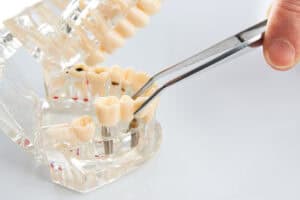
The uncertainty around dental implants often comes down to one question: will they hold up for the long haul. The good news is that titanium implants have one of the strongest track records in modern dentistry, with research showing a 20 year survival rate of 93 percent for well placed implants.
At Precision New York, we walk every patient through the full picture of implant longevity, from the materials we use to the daily habits that keep a new smile secure for decades. We believe a lasting result starts with an honest look at what actually determines how long an implant holds up.
What Determines How Long an Implant Lasts
The lifespan of a dental implant depends on a mix of surgical precision, bone health, and the care a patient puts in afterward. A titanium implant post is designed to fuse with the jawbone through a process called osseointegration, and once that bond is solid, the post itself rarely wears out. According to a systematic review published in the International Journal of Oral and Maxillofacial Surgery, implants tracked for 20 years or more showed a 93 percent survival rate, with most failures tied to biological or mechanical factors rather than the implant material breaking down.
Bone density plays one of the biggest roles in this equation. Patients who have experienced bone loss before treatment may need a bone grafting procedure to build a stable foundation before an implant can be placed. We evaluate bone quality with imaging before every case so the implant has the support it needs to last.
The Crown vs. the Implant Post
It helps to separate the two parts of an implant when talking about lifespan, since they age differently.
- Implant post: The titanium post fused into the jawbone typically lasts 20 years or longer, and often for a patient’s lifetime, when properly placed and maintained.
- Crown: The visible tooth replacement usually lasts 10 to 15 years before normal wear calls for a replacement.
- Abutment: The connector piece between post and crown rarely needs attention unless the crown above it is being swapped out.
- Full arch restoration: A full arch solution follows similar timelines per implant, though the prosthetic bridge itself may need adjustment sooner than a single crown.
Replacing a worn crown is a routine, low-stress appointment and does not mean the implant underneath has failed. This distinction often puts patients at ease once they understand it.
Daily Habits That Extend Implant Life
Good oral hygiene protects an implant the same way it protects a natural tooth, though a few habits matter even more once an implant is in place. Brushing twice daily and flossing around the implant site helps prevent peri-implantitis, an inflammatory condition around the implant that is the leading cause of early failure. Routine dental visits let us catch early signs of bone loss or gum irritation before they threaten the implant.
Smoking is one of the clearest risk factors for implant complications, since it slows healing and reduces blood flow to the gum tissue. Grinding or clenching also puts excess pressure on an implant, so patients with this habit may benefit from a nightguard to protect their investment. Diet matters too. A calcium rich diet supports the jawbone that anchors the implant.
When an Implant May Need Attention
Even with excellent care, implants occasionally need adjustment or replacement. Warning signs include persistent discomfort, visible gum recession around the implant, or looseness when biting down, and any of these calls for a prompt evaluation. Left unaddressed, peri-implantitis can progress and compromise the bone supporting the implant.
If a patient is dealing with an early implant failure or considering treatment after a previous implant did not integrate properly, same day implants may be an option depending on bone quality and healing status. Every case is different, so a thorough exam and imaging guide the right path forward.
Choosing the Right Team for Long-Term Success
The surgeon placing an implant has a direct impact on how long it lasts. Precise placement, careful bone assessment, and the right implant system all factor into long-term success, which is why the surgical phase deserves the same attention as the daily care that follows. Dr. Mohamed El-Ounsi trained at NYU Langone and Bellevue Hospital, one of the top oral and maxillofacial surgery programs in the country, and served as chief resident during his final year.
We build every treatment plan around individualized imaging and bone assessment rather than a one size fits all approach, and we walk patients through financing options like CareCredit, Cherry, Alphaeon, and Proceed so cost never gets in the way of a lasting result. If you are ready to talk through your own timeline for a new smile, reach out through our contact form and our team will help you get started.