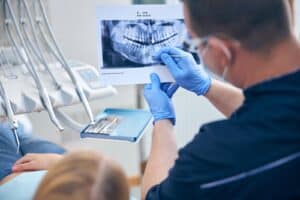
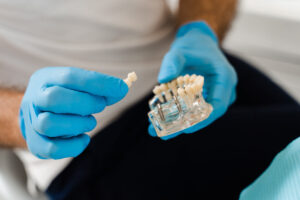
A gap in your smile might not seem like an emergency, especially if the missing tooth sits toward the back of your mouth where it is hard to notice. But a single missing tooth rarely stays a one-tooth problem for long. Without a root in place to keep the surrounding bone active, the jaw begins to change shape within weeks, and nearby teeth start to shift to fill the space. What looks like a minor cosmetic issue today can turn into a much larger dental concern down the road.
Our team at Precision Oral and Maxillofacial Surgery works with patients across Long Island who have put off replacing a missing tooth, whether it was lost to an injury, decay, or an earlier extraction. The sooner this gets addressed, the more treatment options are typically available, and the easier it is to protect the surrounding teeth and jawbone from further changes.
The Domino Effect of an Empty Space
When a tooth is removed or falls out, the root that once anchored it into the jawbone disappears along with it. That root used to send signals to the bone every time you bit down or chewed, and those signals kept the bone strong. Once that stimulation stops, the bone in that area begins to shrink through a process dentists call resorption. Research shared through the National Institutes of Health found that more than half of the people surveyed did not realize a missing tooth could lead to jawbone loss or cause nearby teeth to drift out of place, which is a big reason this issue often goes unaddressed for years.
Left on its own, a single missing tooth can set off several changes throughout your mouth, including:
- Bone loss in the jaw where the tooth root used to sit
- Nearby teeth tilting or drifting into the open space
- The opposing tooth supra-erupting, or gradually getting pushed out of its socket, since it no longer has anything to bite against
- An increased risk of further tooth loss, since fewer remaining teeth must absorb and distribute chewing force across less overall tooth surface area
- A gradual shift in how your upper and lower teeth fit together
Any one of these changes can make future treatment more involved, which is part of why timing matters so much with tooth replacement.
How This Affects Your Bite, Speech, and Confidence
As nearby teeth shift and the jawbone changes shape, chewing tends to get harder, especially on the side with the gap. Many people adjust by favoring the opposite side without even noticing, and that extra strain can lead to jaw soreness, headaches, or discomfort in the jaw joint over time.
A missing tooth, especially one near the front, can also affect speech, since your tongue and lips rely on your teeth to form certain sounds clearly. For a lot of patients, the bigger issue is simply how it feels to smile, laugh, or speak up in a room once there is a visible gap. Over months and years, these small daily habits add up, and the longer a gap is left alone, the more they tend to compound.
Your Options for Replacing a Missing Tooth
The right way to replace a missing tooth depends on where it is, how long it has been missing, and how much bone and gum tissue remain in that area. A dental implant is often the most stable long-term option because it replaces the tooth root itself, not just the visible part of the tooth. In some cases, an immediate implant may be placed the same day a tooth is removed, which helps limit how much bone loss occurs before treatment begins, while also decreasing the wait time for the final crown and the number of surgical procedures required.
If bone loss has already started, a bone grafting procedure can rebuild the area so it can properly support an implant. For patients missing several teeth in a row, options like full arch rehabilitation may make more sense than replacing each tooth individually. We also use technology like platelet rich fibrin, which is made from your own blood, to help support healing around a new implant. Every mouth is a little different, which is why treatment plans are built around each patient’s specific bone structure, bite, and goals, not a one-size-fits-all approach.
Talk to Precision Oral and Maxillofacial Surgery About Your Missing Tooth
A missing tooth does not have to turn into a bigger dental problem. Our team offers same-day consultations, and if you are dealing with a dental emergency, we also provide same-day emergency care so you are not left waiting in pain. We work with most major dental insurance plans and offer financing options like CareCredit, Cherry, and Alphaeon, so cost does not have to stand between you and a healthier smile.
If you have a missing tooth you have been meaning to deal with, now is a good time to find out what your options look like. Reach out to our team to schedule a consultation and take the first step toward restoring your smile.