You have spent years dealing with loose teeth, sore gums, or the slow decline of a smile you used to trust. Now someone has mentioned two very different paths forward, and the terms alone can be confusing. Full arch implants and traditional dentures both replace missing teeth, but they work in almost opposite ways, and the daily experience of living with each one is not close to the same.
At Precision Oral and Maxillofacial Surgery, we walk patients through both options so the decision feels informed rather than rushed. Our full arch rehabilitation services are built around long-term function and stability, and we want you to see exactly how they compare to the removable dentures many patients grew up associating with tooth loss.
How Each Option Is Held In Place
Traditional dentures rest on top of the gums and stay in place through suction, adhesive, or the natural contour of the jaw. Over time, as bone volume decreases, that fit can loosen, causing dentures to shift while eating or speaking. Many patients compensate with adhesive pastes, avoiding certain foods altogether, or not using their denture at all, which can affect nutrition and confidence.
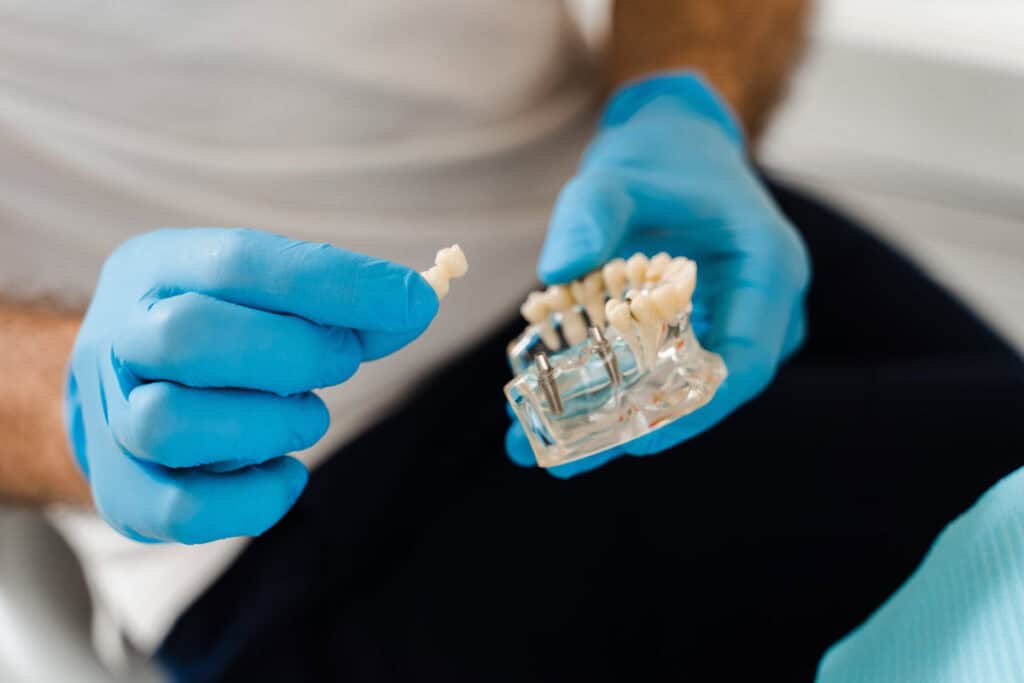
Full arch implants take a different approach entirely. Titanium implant posts are placed directly into the jawbone, and a full row of prosthetic teeth is anchored to those posts. Because the restoration is fixed rather than resting on the gums, it does not slide, click, or require adhesive of any kind, or daily removal and placing the dentures in a cup next to the bed. The bone actually fuses to the implant surface over the following months, creating a foundation closer to that of a natural tooth root.
What Happens To The Jawbone Over Time
One of the most overlooked differences between these two options is what happens beneath the surface. Dentures sit passively on the ridge of the jaw and provide no stimulation to the bone underneath. Without that stimulation, the jawbone continues to shrink year after year, which is why many long-term denture wearers notice their face shape changing or their dentures needing frequent relines.
Dental implants function more like natural tooth roots because they transmit chewing forces directly into the bone. This ongoing stimulation helps preserve jawbone density rather than letting it recede. Patients who are not currently candidates due to bone loss have options beyond traditional grafting as well. Bone grafting can rebuild the area needed to support implant placement, and zygomatic implants, which anchor into the cheekbone instead of the jaw, may allow some patients with significant bone loss to avoid grafting altogether.
Comparing Daily Function And Comfort
The practical, everyday differences are often what patients notice first. Traditional dentures typically restore a fraction of natural bite force, which limits the types of food that feel comfortable to chew. Speaking clearly can also take an adjustment period, and some patients feel self-conscious about movement while talking or laughing in public.
Because full arch implants are fixed in place, most patients regain a bite force much closer to their natural teeth. This means foods like steak, apples, or corn on the cob are back on the table without the hesitation that often comes with removable options. A peer-reviewed study of fixed full-arch implant restorations found consistently high long-term survival rates alongside meaningful improvements in patient-reported chewing function and satisfaction, which is echoed daily in the results we see with our own patients.
Cleaning routines differ as well. Dentures come out for cleaning and soak overnight, while a fixed full arch restoration is cared for more like natural teeth, with brushing and specialized floss designed for implant bridges. Neither routine is difficult, but they require different habits, and most patients find the implant routine more familiar since it resembles the way they cared for their teeth before.
Are You A Candidate For Full Arch Implants
Not every patient starts in the same place, and candidacy depends on a handful of specific factors we evaluate at your first visit. The good news is that most patients who assume they are not eligible actually have more options than they realize once we take a closer look.
A few of the factors we consider during a full arch consultation include the following.
- The amount of healthy bone remaining in the upper or lower jaw
- Whether gum disease or infection needs to be addressed first
- Overall health factors that affect healing after surgery
- Whether you may be a candidate for immediate implants placed the same day as extraction
Once these factors are reviewed, we can walk you through a realistic timeline and explain what recovery may look like based on your specific case rather than a generic estimate.
Weighing Cost And Long-Term Value
Traditional dentures usually carry a lower upfront cost, which understandably makes them appealing at first glance. Full arch implants require more investment initially because of the surgical component and the materials used, and insurance does not typically apply to implant procedures the way it may for other oral surgery services.
That said, dentures often need relining, adjusting, or replacing over the years as the jawbone changes shape, and those costs add up over a lifetime of wear. We help patients weigh the full picture using financing options through CareCredit, Cherry, Alphaeon, Proceed, and HFD, so the decision can be based on long-term value rather than the number on day one.
Precision Oral and Maxillofacial Surgery Is Here To Guide Your Decision
Choosing between full arch implants and traditional dentures comes down to how you want to eat, speak, and feel day to day for years into the future. Dr. Mohamed El-Ounsi, a Board Certified Oral and Maxillofacial Surgeon and Diplomate of ABOMS, evaluates every case individually, drawing on training from NYU Langone and Bellevue Hospital, where he served as Chief Resident, along with a focused interest in dentoalveolar and implant surgery. That level of surgical training, paired with technology like platelet rich fibrin to support healing, means your treatment plan is built around your specific anatomy rather than a one-size-fits-all approach.
If you have been putting off a decision because the options felt overwhelming, a conversation with our team can bring clarity to what your smile and your daily life could look like on the other side. We accept a wide range of insurance carriers for general oral surgery services, and while implant coverage varies by plan, we can help verify your benefits and offer multiple financing paths for implant treatment, and you can reach out through our contact page to schedule a consultation and find out which path fits your needs.