If you are missing most or all of your teeth in one jaw, the question that follows almost every diagnosis is the same one you are probably asking now: how long until this is actually finished? The honest answer involves more than a single number, because full arch rehabilitation unfolds in stages, each with its own timeline and purpose.
At Precision Oral and Maxillofacial Surgery in Deer Park, NY, our full arch rehabilitation services are led by Dr. Mohamed El-Ounsi, a Board Certified Oral and Maxillofacial Surgeon, and our team walks patients through every stage of that timeline before treatment ever begins, so there are no surprises along the way. Our full arch rehabilitation process is built around clear planning, predictable healing windows, and same-day function whenever a patient qualifies for it.
What Happens During Full Arch Rehabilitation
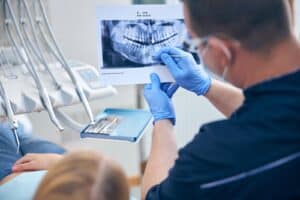
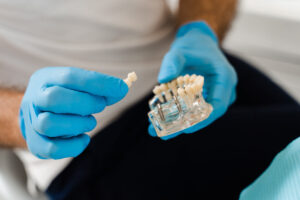
Full arch rehabilitation replaces all or most of the teeth in a jaw using a combination of dental implants and a custom fitted prosthetic arch. The process begins with a comprehensive consultation and 3D imaging, which allows the surgical team to map out implant placement with precision before any procedure takes place. From there, treatment moves into extractions, implant placement and any other necessary surgical modalities, followed by a healing period, and finally the attachment of the permanent prosthetic.
Every case looks a little different depending on how many implants are needed and whether any teeth require extraction first. Some patients qualify for immediate loading, walking out with a temporary set of teeth on the same day or next day their implants are placed. Others need additional preparation before surgery can move forward. Understanding which path applies to your case is part of what the initial consultation is for.
How Long Each Stage Typically Takes
Most full arch cases move through four general phases: consultation and planning, surgical placement, healing, and final restoration. The consultation phase typically takes a single visit, though it may involve follow-up imaging depending on your case. Surgical placement itself usually takes a few hours, and many patients leave that same day or next day with a temporary prosthetic already in place.
The healing phase is where most of the timeline lives. Implants need time to fuse with the jawbone through a process called osseointegration, and this typically takes several months. A try-in of the pre-final prosthesis may also be fabricated during this phase to confirm optimal fit, tissue contact, hygiene access, and aesthetics before the permanent restoration is finalized. Once healing is confirmed, the final permanent prosthetic is fabricated and attached, usually adding a few more weeks to the process. From start to finish, most patients complete full arch rehabilitation within three to six months, though your specific case may run shorter or longer.
What Can Affect Your Timeline
Not every case follows the same schedule, and several factors can shift your timeline in either direction. The most common variable is bone health. Patients with sufficient jawbone density often move through treatment faster, while those who need bone grafting first will typically add extra healing time before implants can be placed.
The number of teeth requiring extraction also plays a role, as does your overall health and how well your body heals. A few other factors commonly influence timeline.
- Bone density: adequate bone volume allows implants to be placed without additional grafting procedures.
- Extraction needs: removing failing teeth before or during implant placement can extend the initial surgical phase.
- Healing response: individual healing rates vary, and conditions like smoking or diabetes can slow osseointegration.
- Number of implants: cases requiring more implants per arch may involve additional planning and surgical time.
Once these factors are assessed at your consultation, your treatment plan will reflect a timeline built specifically around your case rather than a generic estimate.
What Recovery Looks Like Along the Way
Recovery after full arch rehabilitation happens gradually, and most patients notice steady improvement week by week. The first few days after surgery typically involve some swelling and tenderness, which can be managed with guidance from your surgical team. A soft food diet is usually recommended early on, with a gradual return to normal eating as healing progresses.
Because temporary teeth are often placed the same day or next day as surgery, many patients are able to speak and eat soft foods with the discomfort largely removed well before the healing process is complete. This immediate load can make a meaningful difference in day to day life while the jawbone fuses with the implants underneath. According to continuing education research on full arch implant rehabilitation, a thorough diagnostic assessment and precise treatment planning are foundational to achieving predictable outcomes throughout the process, which is part of why the planning phase is never rushed at the start of treatment.
Timeline is not the only practical question patients bring to a consultation. Unlike many general dental procedures, full arch rehabilitation and All-on-X treatment are typically paid in full before treatment begins, whether the patient is financing the cost or paying out of pocket, so payment planning is an important part of the same conversation as the treatment timeline.
Precision Oral and Maxillofacial Surgery
Full arch rehabilitation can feel like a long road when you are only picturing the outcome, but understanding each stage along the way makes the process far more manageable. Dr. Mohamed El-Ounsi brings training from NYU College of Dentistry, an oral and maxillofacial surgery residency at NYU Langone and Bellevue Hospital, and board certification through the American Board of Oral and Maxillofacial Surgery to every full arch case, with same-day imaging and immediate implant placement available for qualifying patients.
Financing options through CareCredit, Cherry, Alphaeon Credit, Proceed Finance, and HFD are available to help make treatment more manageable regardless of where you fall on that timeline, and our team is glad to walk through your specific options at a consultation. To get started or ask questions about your own case, contact our office today.